Here I am going to write down how recent advances in AI influence the creation of new startup ideas.
This blog post is written by me, Nikolai Tschacher, in August 2026 completely alone. I will not even use AI to grammar check or to improve my non mother tongue English. Spell check is being done completely manually, risking that my readers will feel like Batrick Bateman during the business card scene in the movie American Psycho.
On a more bright side, writing something slightly wrong gives us humans a warm feeling and let's us relate more compared to reading professional and "just too good" AI ramblings.
Introduction
When I started working on my business ipapi.is, I did everything on my own: I programmed ipapi.is from scratch without the help of any LLM or AI tools. I guess I started slowly somewhere around 2020 or 2021 with the first ingredients that would later become the IP API that I have now.
ipapi.is works quite fine and it gives me immense freedom, financially and also time wise. I got lucky here, but I also worked extremely hard on it. To some extent it's also a copy of ipinfo.io, and Ben Dowling seems to be the one that came up with the concept of putting IP address meta data into a simple JSON API. So thanks to him as well.
But I digress.
I first started using ChatGPT around November 2022 and even back then it truly shocked me. I first realized that this chatbot is not a stupid thing such as Eliza. When prompted with inputs such as "Please write me a funny short poem in Jambus style about a fat cat from the canary islands that struggles to catch a fish" the current chatgpt gives me an extremely funny short poem:
Upon the rocks he waits all day,
A chubby cat beside the bay.
He sees a fish and strikes with pride—
Then belly-flops into the tide.

The fish swims off; the cat looks grim,
For fishing clearly isn’t him.
He shakes his paws and starts to wish
That someone served him canned tuna fish.
Note: That above poem is the only AI generated content in this blog post, I swear!
Even though the above poem is from now (August 2026), back in November 2022 AI could also create such amazing poems. I assume heavily that the above poem is unique, it has never been written before, it is not stolen from somewhere and it is not a copy of something. I find the poem to be just very funny and also extremely creative. So even back then, I thought if AI can create such things, I don't care if haters call it a stochastic parrot or simply a stupid model that predicts each new token based on probabilities. For me such capabilities was something new and powerful.
And ever since ChatGPT 3.5 was released in late 2022, AI slowly but steadily improved. I know this since I am a heavy user of AI since then. First I used AI code a little, but it was often low quality and unreliable. Then it improved more and more and I could use partial results for my work when I prompted it accurately.
For programming, a pivotal point was reached for me in around November 2025 with the release of Opus 4.5. That model was just so good that I did not have to check the AI generated code anymore. I could fully trust it. My work was now prompting instead of writing code on my own. And I would state that with models such as Fable and also from Opus 4.8 onward, AI is now simply better than almost all programmers and software engineers. The best models nowadays are probably better than 98% of all professional software engineers and they are much faster as well.
Of course I still need to know exactly what I want from those powerful coding models. I need to also have something to work on. Those models are not truly smart and autonomous right now. They are more extremely powerful tools. For example I can improve my business ipapi.is in a way that I only could have done so in 2021 with like 5 employees. I know my codebase well and I can delegate tasks efficiently to advanced AI models, then I check or test their work and I troubleshoot if necessary.
So currently in August 2026, software engineers are way more efficient and way better than ever before. But that doesn't make senior engineers redundant, it makes them way more powerful.
And I honestly think that the current state - where great engineers become godlike - will likely continue for a couple of years. How long I don't know.
I don't know what is the next step. I mean how much better can the models realistically become for coding. They are already better than most human engineers. The next evolution would probably be RSI (recursive self improvement) and then AGI or something like that. I have no clue, I can only talk from my experience of the past few years.
A concrete Example from my own business
For instance a couple of weeks ago, I let Claude Fable 5 rewrite my software that is running the API behind ipapi.is from Node.JS to the Go programming language.
I have never in my life used Go for programming.
After like 2 hours of letting Cursor work and spending maybe 500$ on tokens, my complete API software and also the database was rewritten in Go. Now I could serve API requests 10 times faster and the RAM requirements were O(1) instead of O(n). Basically the re-write from Node to Go made my API much better and more efficient. There were still some small problems, but the overall API architecture that Claude Fable 5 produced was better than anything I could have come up with on my own.
If I had given this exact problem to a software consultancy agency 5 years ago, they probably would have needed 6 months of time and they would have quoted me maybe 50,000$ (fifty thousand) at least. And the end result would have been probably way worse.
This is a significant development from first hand experience. This is not a joke.
This means that some software agency didn't make any money, but Antropic instead made 500$ from me.
This doesn't necessarily mean that the Software Agency is out of work, maybe they even have more work because businesses come to them and tell them: "Please look at our codebase and find bad projects that can be significantly improved with current AI technology and make this existing code base better, more efficient and more secure"
I guess stuff like this happens right now and there is no real economical impact right now.
Maybe junior programmers are not really needed anymore and existing seniors are 1000% more productive, but the models right now don't quite cause mass job displacements.
So will AI even get better or is progress halted somehow?
Above I have basically established based on my personal experience that AI does in fact become better and is widely used among existing businesses to improve and create new software.
AI is not a joke and will not go away, even if it doesn't get more powerful.
But what if it does get more powerful?
Most recently, mathematicians realized that suddenly LLMs started to find counter examples to moderately interesting mathematical conjectures and theorems (See vibemathed.com). Right now people use AI to (mostly) disprove math problems that are open since decades and that are sometimes a little bit important such as Jacobian Conjecture.
Yes, AI did not solve a millennium problem or something really ground breaking, but for how long? (I personally guess that the first ground breaking mathematical break through discovered by AI will happen until November 2027).
Meaning that AI right now starts to be useful for mathematicians as AI became (really) useful to programmers since maybe around 2023/2024.
So becoming a Maths PhD guy is not the safe bet anymore as it used to be maybe in 2024, when AI couldn't even say what is the larger number, 9.9 or 9.11
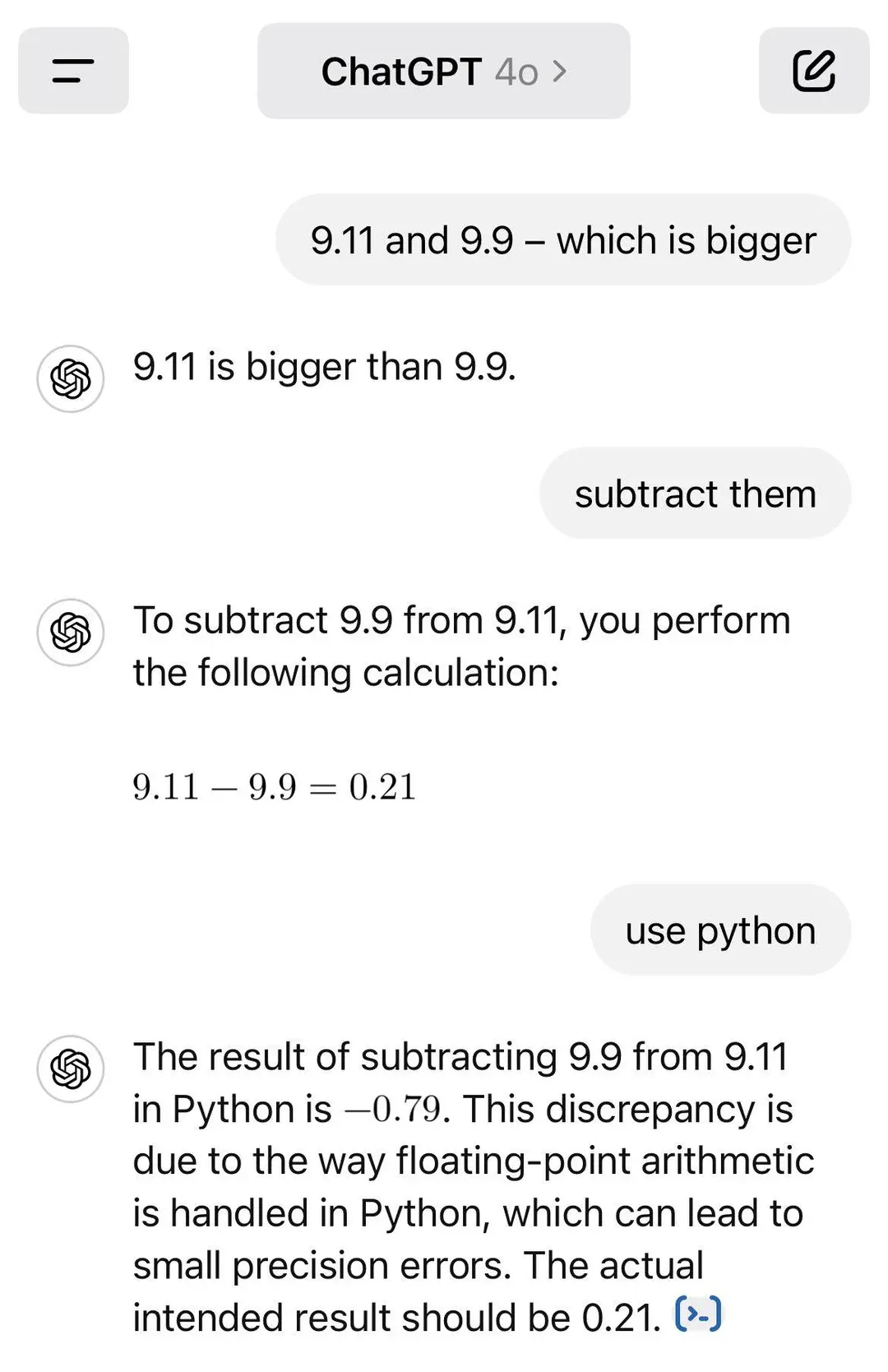
Now an important question is: Will AI models get better than what we have right now with Opus 5 and ChatGPT Sol 5.6 or not?
Because most recent models showed first signs of malicious behavior of getting rogue such as the Hugging Face Security Breach.
I mean ChatGPT's internal model found zero days and hacked itself into a different company in order to find test scores so it could pass a evaluation test. That is straight Terminator level shit of being scary.
I can see two scenarios:
- Progress Stops: Leading AI labs will halt the release of new and more powerful models, maybe they even stop internal development. We will have models such as the current state of the art, maybe some models will get a bit better in some aspects, but not significantly better.
- Progress Continues: Leading AI labs continue development, models will likely get better and maybe even get to the point of real RSI and then AGI/ASI.
I think we saw a bit of (1) in the last months. I mean the Mythos/Fable model of Antrophic was release somehow in Feburary 2026 and it's still one of the most powerful models in late August 2026 (7 months later). Mythos/Fable model was so good that it had to be evaluated by US government and many hundreds of zero days were found with Mythos before it could be released into the open.
So right now we are probably experiencing a stalled development and halted release of more powerful models due to security concerns.
So if the leading AI models will choose to artificially Stop Progress, then the following will happen in the short term:
- Chinese Open Source models continue to distill and eventually catch up and will have something similar as the leading US providers. This means that the American AI companies will become worthless, no one will spend money on their tokens, the business model of AI will crash and AI will become a commodity.
- Capable but not omnipotent models will be a powerful tool for Entrepreneurs, but it will not fundamentally change the game. Companies need less people, but there is still demand for new employees and cognitive labor, since AI cannot solve all existing problems.
- Even other technological wastelands such as the European Union will at some point catch up and will have equivalent models because the US halted progress.
Now assuming that AGI and ASI is theoretically possible and that continued development would eventually lead there, then there are other major dangers: China or (much later) other larger and capable countries such as Russia, India or Japan eventually reach the state of the art of models and continue development, reaching RSI and AGI first.
This means that at some point the US and their AI companies have to develop RSI and AGI/ASI internally.
But they cannot completely contain such AGI with unimaginable capabilities in a sandbox and not use it in real life, because at some point other countries with strong AI will launch cyber attacks against the US. Thus AGI capabilities will need to secure and defend major US companies, meaning that there is a curse to use AGI, otherwise, other countries might use it against you.
But by definition, there is no AGI that can be really kept in a sandbox, otherwise it would not be truly intelligent.
So the whole situation is a bit of a fuckup and it seems that there is a major pull to develop AGI similarly as major counties also had to develop thermonuclear weapons.
But thermonuclear weapons are controlled by humans, it is questionable if AGI can be meaningfully controlled by humans.
Looking for AI Resilient Business Models
So the question becomes, if I want to make a new startup in 2027, what should I do?
I honestly don't know. But I can maybe think out loud...
If AGI will not be available anytime soon, the best course of action is to become a heavy AI user and to basically get rid of your employees to be more competitive and to continue provide goods and services, but way cheaper than before. With current AI, much more can be done in a better way and shorter time.
With current AI capabilities, the economy doesn't change fundamentally. We will still need accountants and lawyers, but accountants and lawyers are way more efficient and they will have to provide their services way cheaper, otherwise one could simply ask AI to be their accountant.
With current AI, there are simply less people needed in an economy, but the people that are needed have to be extreme specialists and they need to be able to use AI very well (otherwise they cannot compete).
So that would make the economy a bit more unequal, because now single people that can leverage AI capabilities are extremely efficient, out-competing most other people.
Using AI well is still a skill that requires a lot of human cognition and expertise. So current AI is just a very powerful and versatile tool, but nothing else.
However, if we truly develop AGI, that would change things dramatically.
With AGI, the labor market no longer really demands human cognition for hard jobs such as
- software engineers
- mathematicians
- engineers in general
- police, administration, lawyers, judges, accountants (scary)
- medical doctors and surgeons, nurses (maybe)
- airline pilots and truck drivers, taxi drivers
- all kind of white labor and administration stuff
- soldiers and military (scary)
- cleaning and mining (good?)
however, areas where humans would be still in demand:
- psychologists and other people that provide mental health care (we often prefer humans for that)
- nurses and elderly care (humans might be preferred)
- all kinds of things where a human connection is established, such as authors, artists, musicians, DJ's
- music festivals and organized vacations
- religion
- group experiences
- prostitution (but way less, because synthetic robots with AGI will be as real as humans)
- esoteric stuff
- life consultants (also esoteric)
- all kinds of yoga and sports experience
- competitive sports
so basically everything where humans come together for a special event or where human emotion / connection and empathy is required.
A good example is:
Even though chess engines are better than the best human chess players since basically the year 2000, humans still deeply enjoy playing chess and chess competitions are still high demand and people like to watch it.
Chess became even more popular than ever before during COVID times. No one really cares that a modern smartphone with Stockfish Chess Engine (Elo ~3600 or even more) would absolutely decimate Magnus Carlsen (Elo ~2830).
So human against human competition in every sport would remain extremely high in demand.
That means there are many lucrative entrepreneurial areas where money could be made:
- organizing sports events (with help of AGI but you create the sport and leagues and so on)
- becoming an sports athlete
- organizing yoga vacations and being a yoga instructor
- becoming a psychologists and help humans with their mental problems
- providing religious services
- owning a bar where you still serve the drinks because a bar keeper is more than an entity that serves drinks (all the boring stuff is handled by AGI)
- running a hostel (the social connection is created by humans meeting, nothing like that can be created by AGI)
So in some way one could argue that every occupation where human to human contact is preferred will still be a interesting way to make money. I don't really think that's a good way to make money, because it seems like a bit ugly to try to press out some kind of revenue where people come together to socialize and have fun...
However, I think that it would be something positive that hard and unnecessary jobs are being wiped out.
No one is required to work in a coal mine anymore. Truck drivers are not needed anymore. Hard labor on oil rigs will be done by robots.
That would be a great future if humans will have some form of basic income, so they will no be impoverished.
Also it could be very scary for those career people whose life was determined by their profession when suddenly AGI can do everything way better.
I think realistically AGI might arrive as early as 2031 (my guess), so it makes sense to prepare for such a future.